


How to Choose a Frame for Art Prints
A good frame protects a print and completes the look of a room. A poor one can flatten even a beautiful piece. This guide walks you through choosing a frame for an art print, from the mount to the glass, plus the sizes and mistakes to watch for.
Start with the artwork
Look at the colours and mood of the print first. A soft watercolour often suits a light timber or white frame, while a bold, dark piece can carry a black or deep timber frame. The frame should support the art, not compete with it.
Step 1: Measure the print
Measure the full sheet, including any white border. For reference, A4 is 210 by 297 mm, A3 is 297 by 420 mm and A2 is 420 by 594 mm. Check the size listed on the product page, since prints can vary.

Step 2: Decide on a mount
A mount, also called a mat, is the card border between the print and the frame. It gives the artwork breathing room and keeps the print from touching the glass, which can cause sticking over time. Choose an archival or acid-free mount so it does not discolour the paper.
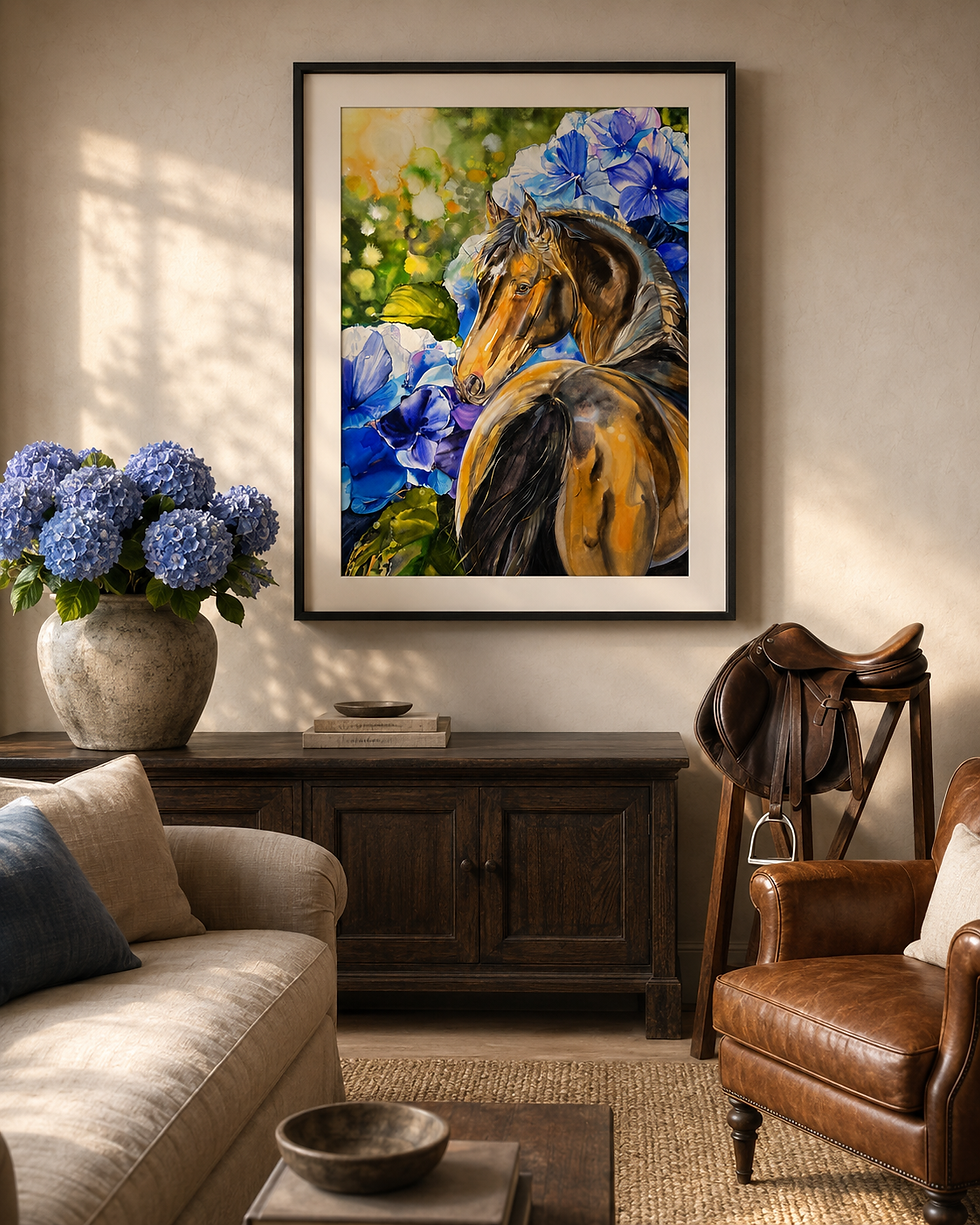
A wider mount makes a print feel more important and gallery-like.
A narrow mount feels more casual and suits smaller pieces.
White and off-white are the safest choices. Match the tone to the white of the paper.
If a print already has a white border, you can frame it with a mount that shows part of the border, or without a mount and let the border act as one.
Step 3: Choose a frame colour and depth
Light timber: relaxed and coastal, and a natural fit for Hamptons-style rooms.
Black: crisp and graphic, good for strong contrast and modern spaces.
Soft gold or brass: warm and elegant, especially with florals and feminine palettes.
White: clean and airy, which lets the art take centre stage.
For larger pieces, choose a slightly wider frame. A thin frame can look weak around a big artwork.
Step 4: Choose glass or acrylic
Look for glazing that filters UV light to help protect the print from fading. Acrylic is lighter and more shatter-resistant than glass, which makes it a sensible choice for large frames, children's rooms and homes with pets.

Step 5: Backing and hanging
A properly framed print should have an acid-free backing board and a sealed dust cover on the back. The print should be attached to the backing with archival hinging tape, not sticky tape or glue. If you are framing at home, never stick the print down flat, since that makes it impossible to remove without damage.
DIY or custom framing?
Ready-made frames are affordable and quick, and work best for standard sizes.
Custom framing suits unusual sizes, valuable pieces and prints you want to look their best. It costs more but the fit and materials are higher quality.
Common framing mistakes
Letting the print touch the glass.
Using non-archival mounts or backing that can discolour the paper.
Sticking the print down with tape or glue.
Choosing a frame that fights with the artwork's colours.
Hanging framed art in strong sunlight.
Frequently asked questions
Should I frame a print with its white border?
You can. Many people leave the border visible and use a mount that sits over the edge, or a frame without a mount so the border acts as the mount.
What size mount should I choose?
Mount widths of about 5 to 8 cm suit most prints. Larger works can take a wider mount.
Is glass or acrylic better?
Both work. Acrylic is lighter and safer, glass is harder and scratches less easily. Choose a UV-filtering option in either.
Can I frame a print myself?
Yes, as long as you use archival materials and hinge the print rather than gluing it. If it is a valued piece, professional framing is worth considering.
Browse the signed art print collection to find a piece to frame.
Comments