


How to Choose the Right Size Artwork for Your Wall
Choosing the right size artwork is one of the most common decorating questions, and one of the easiest to get wrong. A piece that is too small can look lost, and one that is too large can overwhelm a room. This guide gives you simple rules, a practical method and the standard sizes to know.
The two-thirds rule
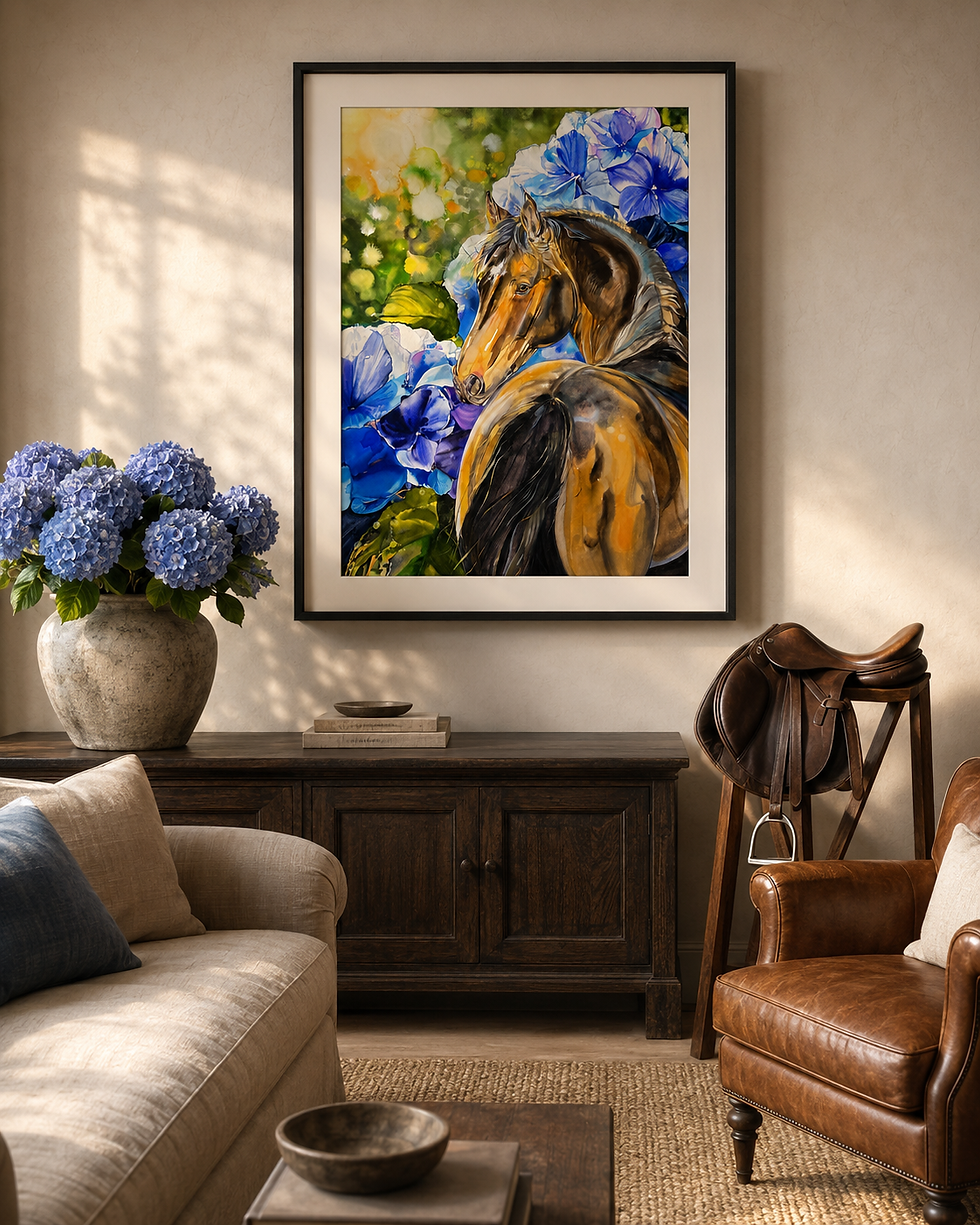
When you are hanging art above a sofa, sideboard, console or bed, a good guide is to choose art that is about two-thirds the width of the furniture, or roughly 60 to 75 per cent. For a 200 cm sofa, that means art about 120 to 150 cm wide, either as one large piece or a group of pieces arranged together.

Choosing for an empty wall
If there is no furniture to guide you, think about the wall itself. A large, bare wall can take a big statement piece or a gallery arrangement. A good approach is to aim for the art to fill about half to two-thirds of the visible wall space, leaving breathing room around it.
Try before you buy
The easiest way to avoid mistakes is to test the size before you commit.
Cut paper or kraft paper to the size of the artwork you are considering.
Tape it to the wall with painter's tape.
Step back and look at it from where you usually sit or stand.
Leave it for a day or two and see how it feels.
Adjust the size until it looks right.
Know the standard sizes
Standard sizes make framing simpler and more affordable. For reference, A4 is 210 by 297 mm, A3 is 297 by 420 mm and A2 is 420 by 594 mm. Remember that a frame and mount will add to the overall size, so measure the finished framed piece, not just the print.
Portrait or landscape?
Portrait (vertical) pieces suit narrow walls, hallways and spaces beside doors, and they make a ceiling feel higher.
Landscape (horizontal) pieces suit wide walls above sofas and beds, and make a room feel broader.
Square pieces are flexible, and work well in groups.
Size by room
Living room: one large piece or a group, about two-thirds of the sofa width.
Bedroom: a large piece above the bed, or two matching pieces either side.
Hallway: a series of smaller, consistent pieces.
Dining room: a medium or large piece at a slightly lower height, since people are sitting.
Home office: smaller pieces at eye level, as you will be close to them.
Once you have chosen
When you have chosen the size, plan the hanging height with our guide to how to hang art and choose a suitable frame.

Common mistakes
Choosing art that is too small for the wall.
Forgetting the size of the frame and mount.
Not testing the size with a template first.
Ignoring ceiling height and furniture.
Frequently asked questions
How big should art be above a sofa?
About two-thirds the width of the sofa, hung 15 to 25 cm above it.
Is it better to have one big piece or several small ones?
Both work. One large piece makes a bold statement, while a group adds interest and flexibility. Keep the combined width close to the two-thirds guide.
What size is A3 in centimetres?
A3 is 29.7 by 42 cm.
How do I check the size before I buy?
Cut a paper template to the size and tape it to the wall.
Browse the original artworks and signed art prints to find a piece in the size you need.


Comments