


What Is an Archival Art Print? Paper, Ink and Why It Matters

When you shop for art prints online, you will often see the word archival. It sounds technical, but the idea is simple: an archival print is made to last. This guide explains what archival means, what to check before you buy, and how to look after your print once it is home.
Archival paper
Archival papers are made to resist yellowing and deterioration over time. They are usually acid-free and lignin-free. Lignin is a component of wood that breaks down and can cause paper to yellow, so it is a sign of lower quality paper. Cotton rag papers are naturally acid-free and are widely used for fine art printing. The paper is a big part of what separates a keepsake print from a poster.

Inks matter too
Pigment-based inks generally hold their colour better over time than dye-based inks. Manufacturers publish lightfastness estimates based on laboratory testing, which is useful as a guide, though real-life results depend on how and where the print is displayed. If a seller does not say what inks they use, it is reasonable to ask.
Giclée, explained
You may see the term giclée. It usually refers to high-quality inkjet printing on fine art paper. It is not a guarantee of quality on its own, so it is still worth checking the paper and ink details.
What limited edition means
A limited edition print is released in a set number of copies. Once the edition sells out, that is it. Ask how many prints are in the edition, and whether each one is signed by hand or carries a printed signature. Some editions are numbered, for example 12 of 100.
Print, poster or reproduction?
Poster: usually mass-produced on standard paper, and not intended to last.
Open edition print: printed on demand with no limit on numbers, sometimes on good paper.
Limited edition print: a capped run, often signed, on archival paper.
Original: a one-of-a-kind artwork made by the artist.
What to look for when buying
Paper: archival and acid-free.
Inks: pigment-based, if the seller can confirm.
Signature: hand signed by the artist.
Edition: limited quantities, clearly stated.
Details: does the seller state the paper, print size and edition size?

How to care for an archival print
Keep it out of direct sunlight and away from damp.
Frame it with an archival mount and UV-filtering glazing.
Handle it by the edges with clean, dry hands.
If you store it unframed, keep it flat in acid-free tissue or a portfolio.
Frequently asked questions
Does archival mean a print will never fade?
No. It means the materials are chosen to last much longer than ordinary materials. Light, humidity and heat will still affect any print over time.
Are all giclée prints archival?
Not necessarily. Giclée describes the printing method, not the quality of the paper and ink. Check both.
Is a signed print worth more?
A hand-signed, limited edition print is often more collectable than an open edition, but the best reason to buy a print is that you love it.
How long will an archival print last?
With good materials and careful framing and display, many decades. The exact lifespan depends on the paper, inks and conditions.
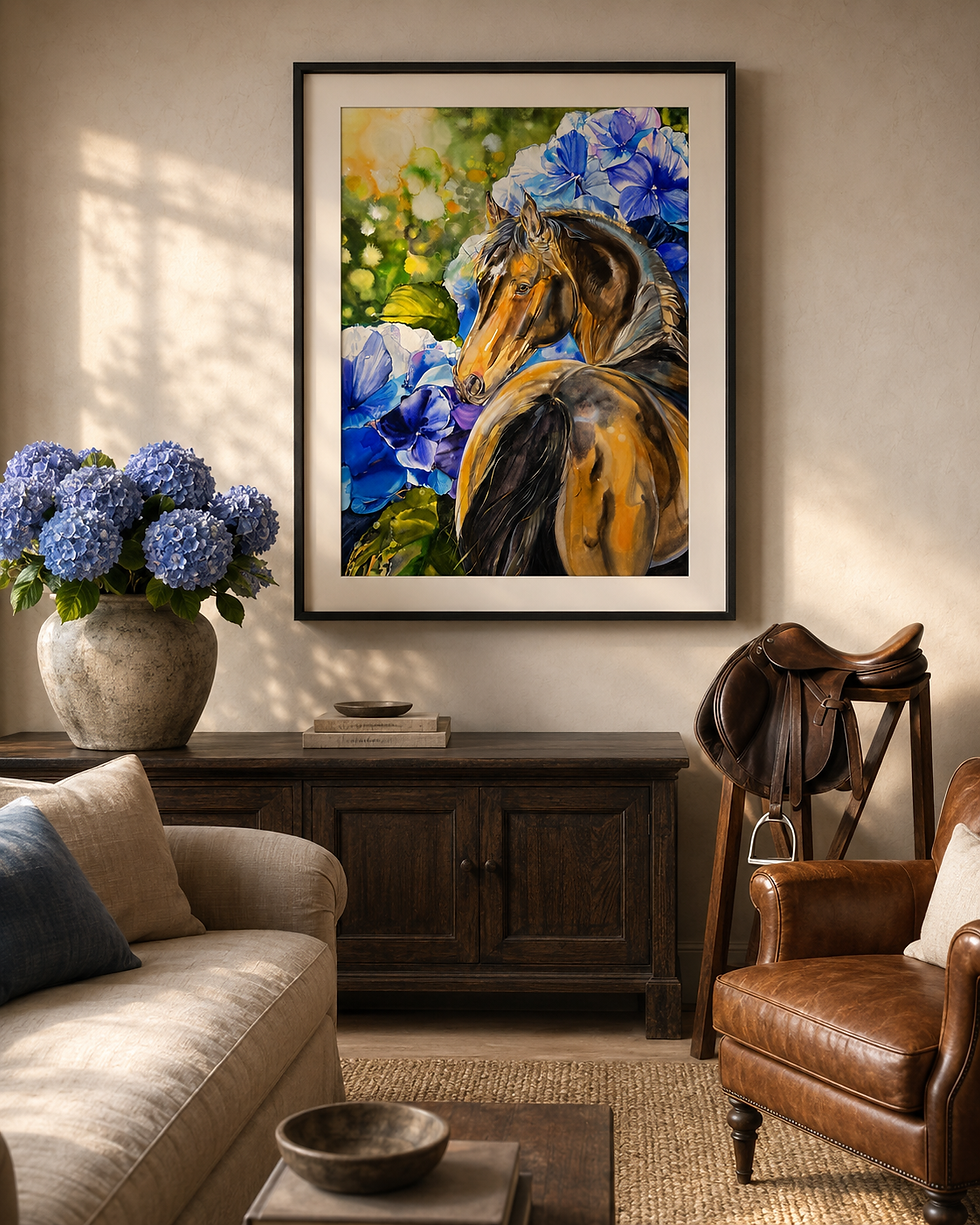
At Pony & Belle, the signed art prints by Belinda Baynes are professionally printed on archival paper in limited quantities and hand signed by the artist.
Comments